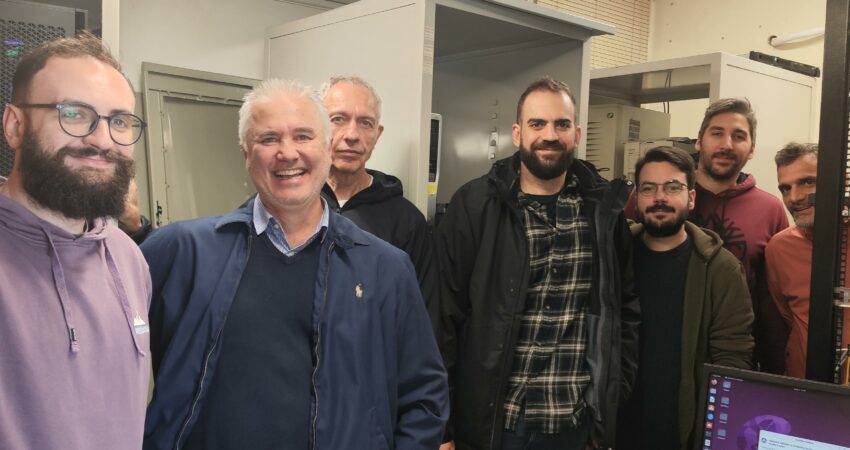
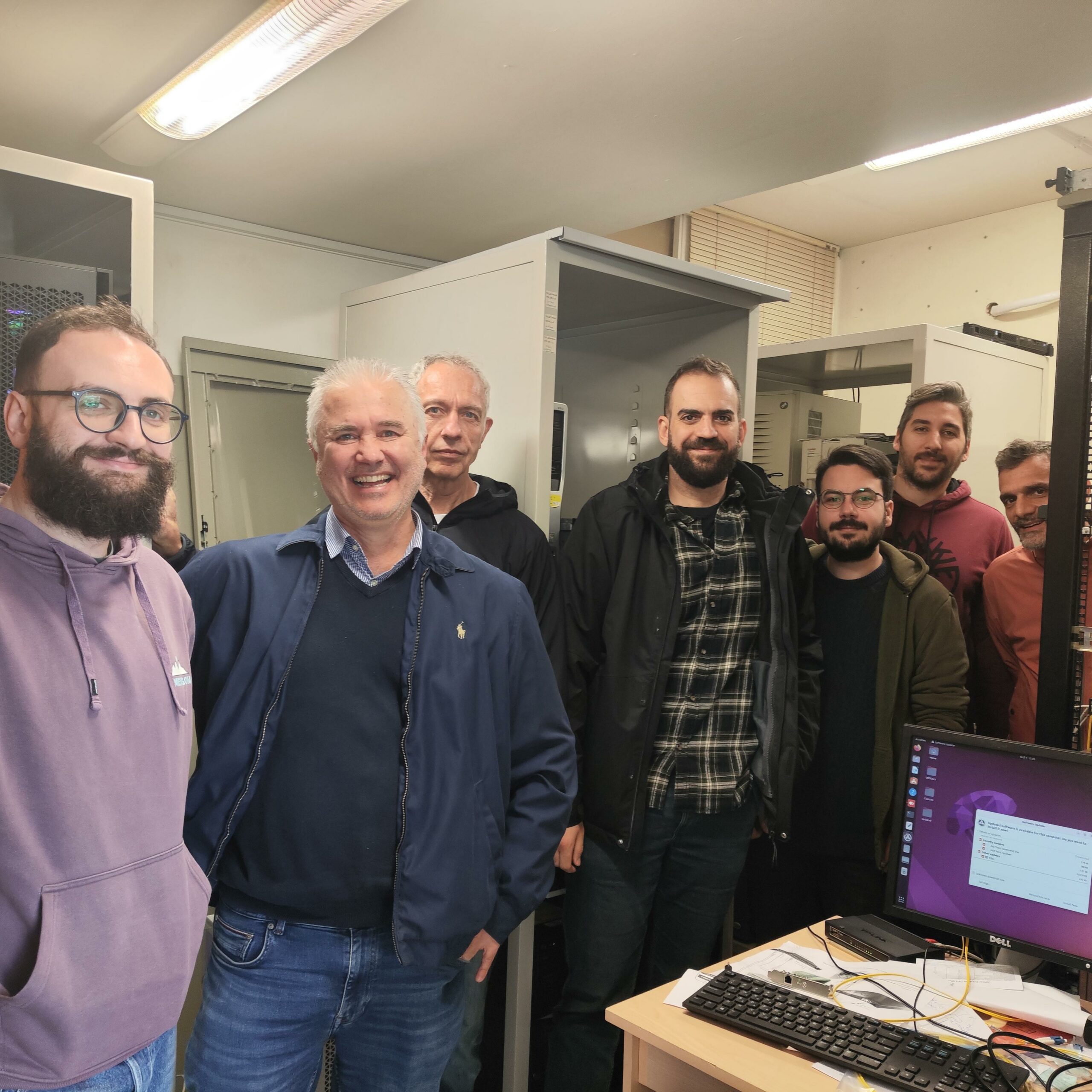
Within the framework of the HellasQCI project, which forms part of the European Quantum Communication Infrastructure (EuroQCI) and is implemented under the coordination of the National Infrastructures for Research and Technology Network (GRNET S.A.), under the auspices of the Ministry of Digital Governance and AI, with the support of the General Secretariat of Telecommunications and Post, the Knowledge Management Unit kmunit.eu of the Institute of Informatics and Telecommunications of NCSR “Demokritos” is implementing a pioneering pilot project for quantum-secure communications in the healthcare sector.
For the first time in Greece, a hospital is leveraging quantum-secure technologies under real operational conditions, aiming to enhance the security of communications and protect sensitive medical data. Within the pilot project, a hybrid quantum security system was developed and a secure digital connection was established between Alexandra University Hospital and NCSR “Demokritos”, using the national quantum communication infrastructure HellasQCI, which is designed, developed and operated by GRNET S.A.
GRNET, as the national digital infrastructure provider and coordinator of HellasQCI, delivers the network and quantum infrastructure that enables the secure interconnection of critical entities.
Through this connection, core digital health services are being tested using exclusively simulated data, such as the secure storage of medical images and electronic patient records, as well as a dedicated application that enables secure communication and collaboration among physicians. In this way, the daily digital operation of a modern hospital is simulated, without the use of real personal data.
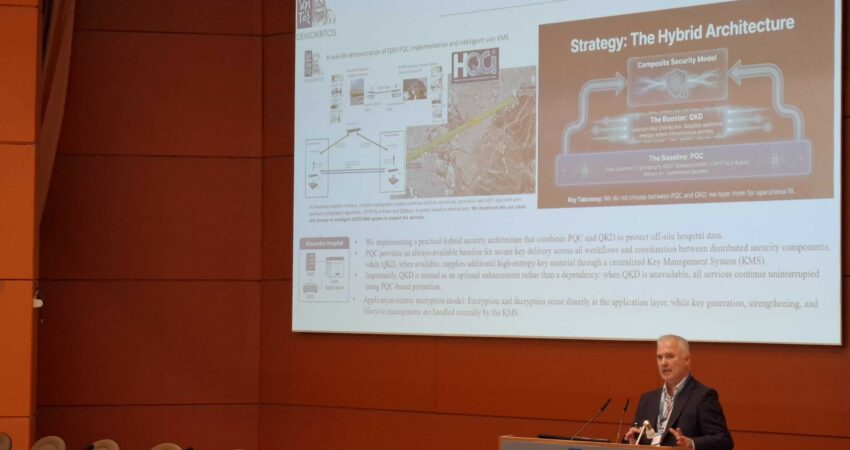
Of particular importance is the fact that NCSR “Demokritos” has developed state-of-the-art domestic technologies that enable the combination of Quantum Key Distribution (QKD) with Post-Quantum Cryptography (PQC). QKD is a technology that protects communications by exploiting the principles of quantum physics, while PQC uses new forms of cryptography that are resilient even to the threats posed by quantum computers.
The pilot project demonstrates in practice that this combination can significantly enhance the security of communications, safeguarding critical infrastructures against present and future digital threats.
The solutions being tested are flexible and easily adaptable, allowing their application in other critical sectors as well, such as:
- defence and national security,
- telecommunications and public infrastructures,
- the protection of critical data and digital services.
The pilot project is accompanied by measurable results, confirming that quantum-secure technologies can substantially enhance communication security and the protection of personal data. This successful implementation in a Greek hospital constitutes a major milestone for the country, paving the way for the broader adoption of quantum-secure communications in Greece.
This successful application in a Greek hospital highlights the role of the national HellasQCI infrastructure, GRNET S.A., and NCSR “Demokritos” as a foundation for the development of quantum-secure digital services in Greece.