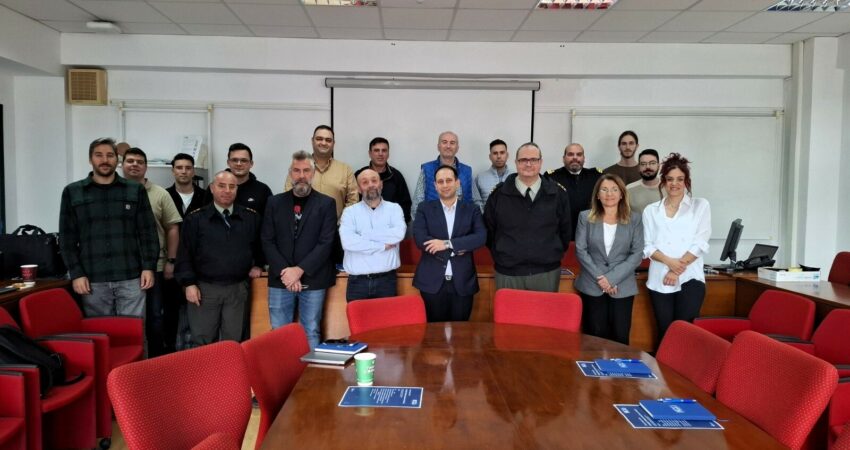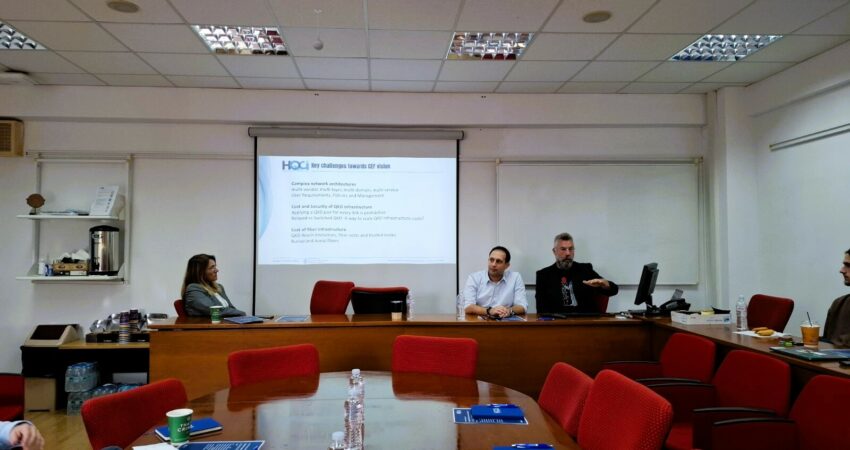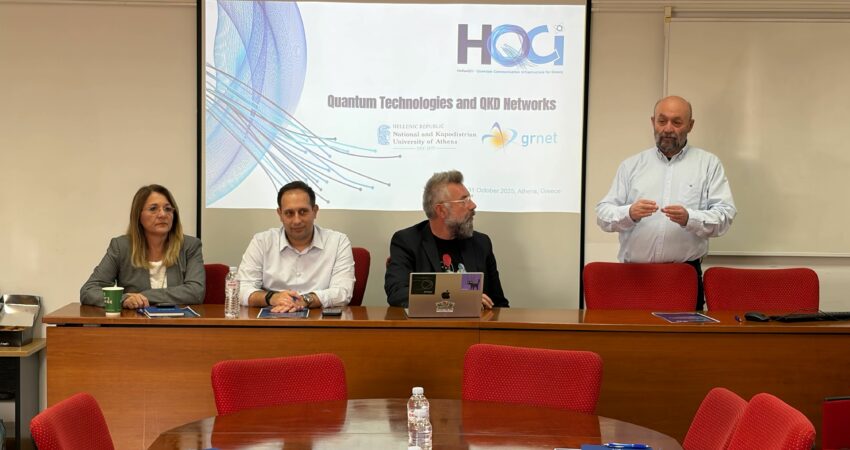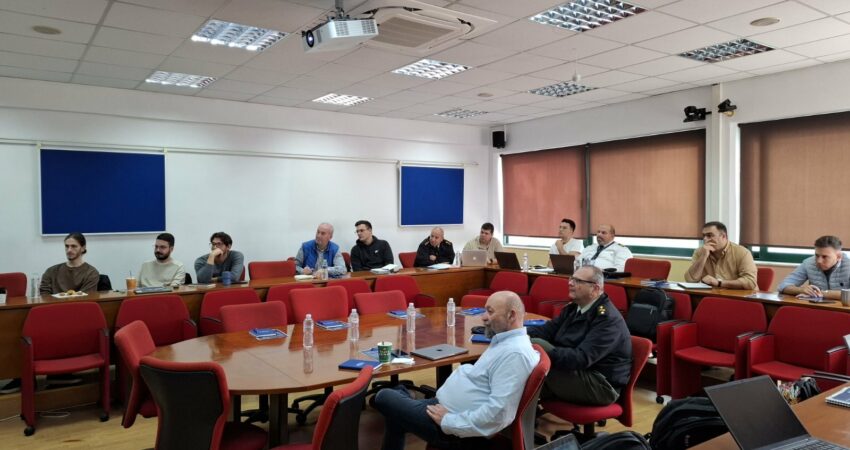
HellasQCI project—coordinated by GRNET under the guidance of the Hellenic Ministry of Digital Governance and Artificial Intelligence, with support from the General Secretariat of Telecommunications and Post and the Technical coordination of the National and Kapodistrian University of Athens—delivered a dedicated end-user training programme to the Hellenic Armed Forces, in collaboration with the National and Kapodistrian University of Athens (NKUA).
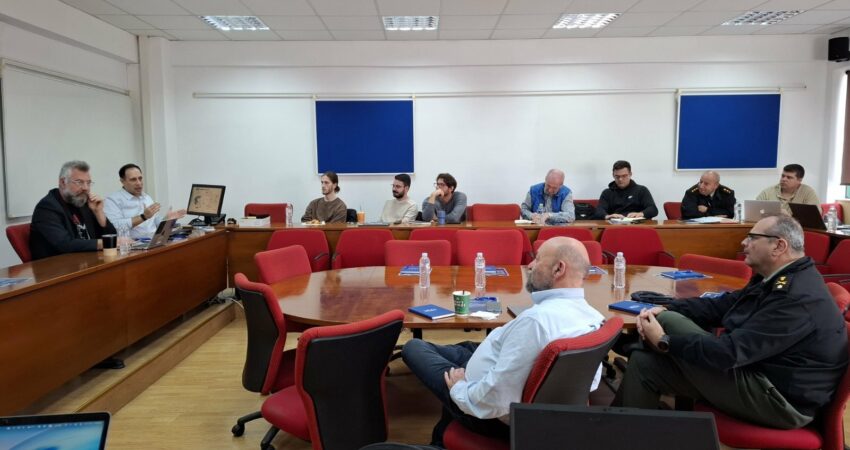
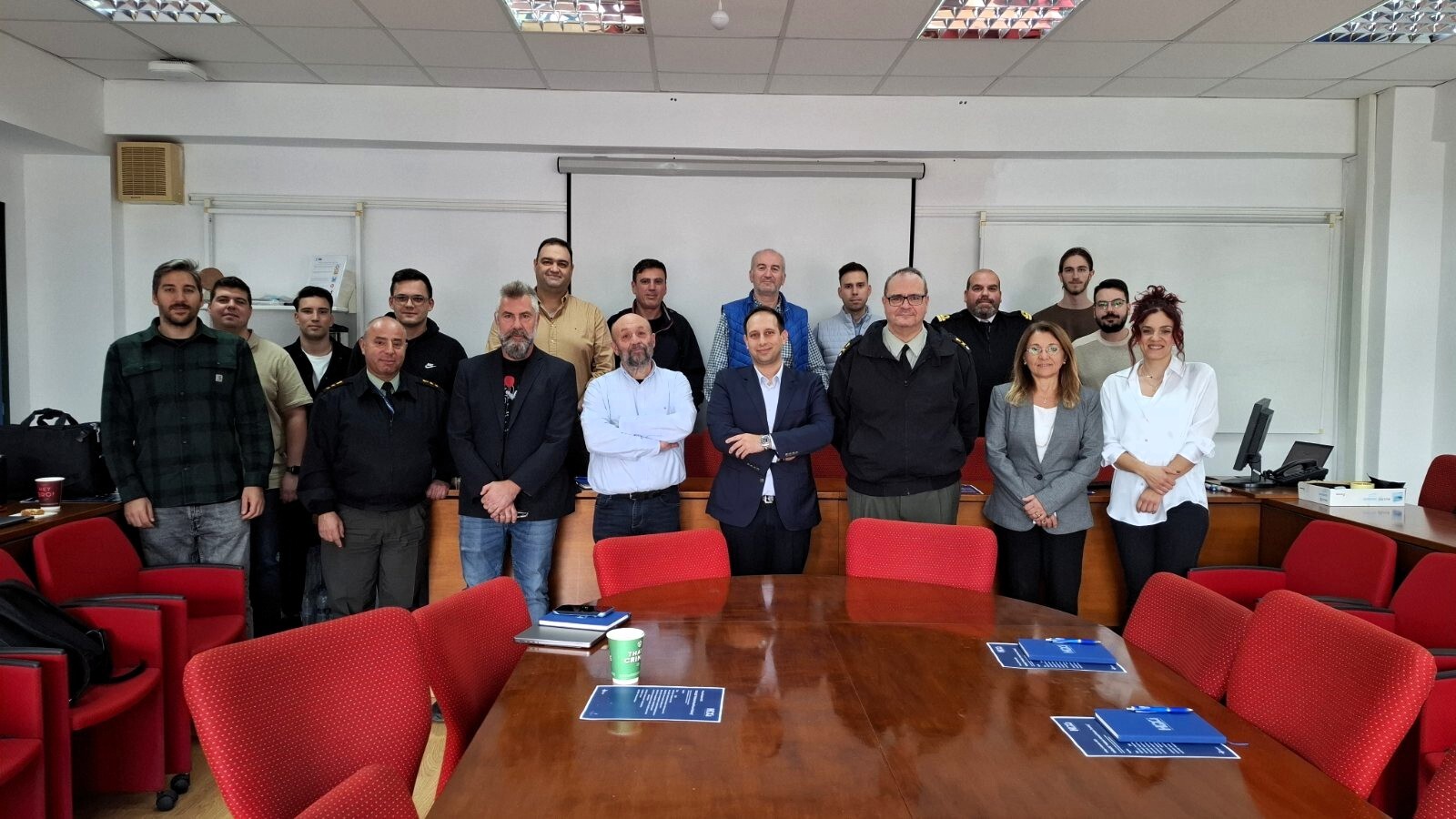
On 31 October 2025, officers from the Hellenic Army, Navy, Air Force, and the Hellenic National Defence General Staff attended an end-user workshop hosted at the Department of Informatics and Telecommunications of NKUA. The training aimed to familiarise participants with quantum-secure communications, the HellasQCI infrastructure, and the dedicated end-nodes through which the Hellenic Army participates in the national quantum communication network, as well as the broader advancements achieved through the HellasQCI project.
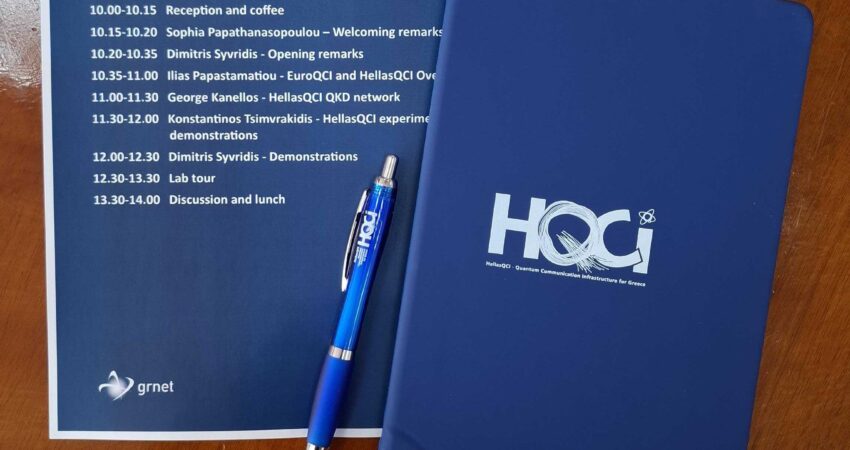
The programme opened with welcoming remarks by Ms. Sophia Papathanasopoulou, representing the General Secretariat of Telecommunications and Post, who emphasised the importance of equipping national authorities with next-generation cybersecurity capabilities. This was followed by opening remarks from Prof. Dimitris Syvridis, highlighting the strategic value of quantum technologies and the significance of close collaboration between research institutions, government bodies, and defence stakeholders.
Dr. Ilias Papastamatiou (GRNET) then delivered a comprehensive presentation on EuroQCI and the HellasQCI national infrastructure, outlining Greece’s growing contribution to Europe’s quantum communication landscape. His intervention also introduced participants to the future expansion of HellasQCI, including the planned extension of the national network through upcoming CEF initiatives and cross-border and space-based quantum communication links. Following this, Assistant Prof. George Kanellos (NKUA) delivered an in-depth presentation on the HellasQCI QKD network architecture, describing the deployment milestones, operational planning, and integration strategy across government and research nodes. Dr. Konstantinos Tsimvrakidis (NKUA) then introduced participants to the project’s experimental demonstrations, showcasing real-world use cases, active entanglement distribution, and field-tested implementations developed within HellasQCI.
The training concluded with hands-on demonstrations, enabling participants to directly observe system functionalities and engage in technical discussions with the experts. The interactive Q&A session that followed reflected strong interest from the Armed Forces regarding the operational applicability of quantum-secure communication technologies.
This training represents a significant step toward building national capacity in quantum communications. HellasQCI will continue to support the Hellenic Armed Forces and other public-sector stakeholders through structured training initiatives, technical demonstrations, and knowledge-exchange activities. At the same time, the project will maintain alignment with EuroQCI policies, and development frameworks, reinforcing Greece’s position as a trusted and interoperable node within Europe’s quantum communication landscape.
The successful organisation and delivery of the training were further supported by Ms. Nana Anastasopoulou (GRNET) and Ms. Anna Tourtoura (GRNET), whose contributions ensured a smooth and effective workshop experience for all participants. In addition, Brigadier General Panagiotis Akouilanos and Lieutenant Colonel Vasileios Zarkadas of the Hellenic National Defence General Staff assisted in coordinating the participation of the attendees.
Quick Stats on the HellasQCI training to the Greek Army
- Participants – End-users 25
- Sessions 3