As a new research and deployment project in the EuroQCI initiative, TransEuroOGS aims to establish a network of interoperable optical ground stations for satellite-based quantum-secure communication across four EU Member States: Germany, Greece, Ireland and Luxembourg. With a budget of approximately €18 million, co-funded by the European Union and national governments, the project has now officially been kicked off with a consortium meeting in Berlin and Jena.
TransEuroOGS will provide a quantum-secure space-to-ground network interface for satellite-based communication with a total of eight interoperable optical ground stations (OGS) in Germany, Greece, Ireland and Luxembourg. As part of Europe’s EuroQCI initiative, an EU-wide quantum communications infrastructure programme, the TransEuroOGS project addresses challenges to secure transnational communication in the EU by utilizing the unique security principles of quantum technologies, especially in quantum key distribution (QKD). Furthermore, the project aims to contribute to a unified European standard for interoperability among the optical ground stations participating in EuroQCI and thus strengthens the technological sovereignty of Europe and its Member States.
Dr. Torsten Siebert, central coordinator of the TransEuroOGS project from the Fraunhofer Institute for Applied Optics and Precision Engineering IOF, Germany, said: “It is a privilege and pleasure to collaborate with all of my colleagues in Ireland, Luxembourg, Germany and Greece for taking on the challenges involved in linking the space and terrestrial segment in EuroQCI with a network of optical ground stations ranging over the northwest to southeast of Europe. In our joint work to demonstrate and establish quantum-secure communication across the geography of the continent, the collaborations in TransEuroOGS stand for the potential we have in all of Europe, when we unite our valuable resources in research and industry. Close collaborations throughout the European community in this field will be at the heart of bringing this key emergent technology one step closer to application in a dedicated contribution to EuroQCI.’’
Kick-off meeting in Germany
The TransEuroOGS project was kicked off with a consortium meeting in Berlin and Jena on the 29th and 30th April. The plenary saw a coming-together of some 30 attendees representing 15 partner universities, industry members and research organisations as well as two national space agencies and two national ministries in the project. The technical work across the two-day consortium meeting focused on a dedicated exchange of competences and extensive resources among the 15 partners in the project.
Dr. Ilias Papastamatiou, Senior Project Manager, GRNET, National Coordinator, Greece, highlighted: “In Greece, we see TransEuroOGS as a pivotal step in bridging the terrestrial and space segments of the EuroQCI. Building on HellasQCI, our national quantum communication infrastructure, we are advancing the seamless integration of terrestrial and satellite-based quantum links. Through our optical ground stations in Helmos, Skinakas and Holomontas, Greece contributes a strategically positioned gateway in southeastern Europe, enabling secure quantum communications across borders. The challenges ahead are many, but the excellent and trustworthy collaboration among partners in Greece, Germany, Luxembourg and Ireland, combined with our shared vision for EuroQCI, gives us strong confidence that we will deliver an interoperable, resilient and operational European quantum-secure network.”
Sophia Papathanasopoulou from the Ministry of Digital Governance and Artificial Intelligence of the Hellenic Republic in Greece added: “At the General Secretariat of Telecommunications and Posts, we consider TransEuroOGS as a strategic milestone for Europe’s digital sovereignty. Greece is firmly committed to the EuroQCI initiative, supporting the development of secure, interoperable and scalable quantum communication infrastructures that integrate both terrestrial and space segments. In strong complementarity with the SEEWQCI project, it further reinforces Greece’s role in advancing cross-border quantum connectivity. Through close cooperation with Germany, Ireland and Luxembourg, we are contributing to a trusted European framework for next-generation secure communications, strengthening resilience, innovation and strategic autonomy across the Union.”
The mission: Quantum-secure communication across borders
TransEuroOGS focuses on the technical harmonisation and interoperability of the eight ground stations participating in the project, as well as their preparation for upcoming satellite missions, which aim to establish space-based quantum-secure communication in Europe. Immediately relevant to this endeavour in Europe will be the EAGLE-1 and SAGA satellite missions, while further missions are in planning.
But the distinctive added value of this project goes beyond achieving alignment and demonstrating interoperability. The geographical distribution of the participating OGS sites is distinct in its range: It spans from northwestern to central and southeastern Europe, encompassing Ireland, Luxembourg, Germany, and Greece, and includes locations on islands and the mainland, as well as in rural and urban areas. This encompasses highly diverse metrological conditions in varying local ecosystems together with the coordination of multiple cross-border constellations for satellite-based quantum key distribution among the four participating Member States.
With this unique diversity of geographic locations and local ecosystems, the project will unite the developments in optical ground stations (OGS) and their linkage to local terrestrial fibre networks as an interface between the space and terrestrial segment of EuroQCI. With OGS sites varying in their developments from an initial construction phase to a pre-operation status, a central aim of the project is the alignment in key architectural elements, components and operational parameters that fulfil the protocol requirements of the EAGLE-1 Mission and further prepare for upcoming satellite missions in Europe. These efforts will merge in a demonstration of interoperability to QKD for secure communication utilizing the resources of EAGLE-1 and linkage to local fibre networks for future access of governmental-related as well as public and private applications scenarios in campaigns that connect OGS sites across Europe.
Co-Funded by the EU and Member States
The total project budget amounts to approximately €18 million, with co-funding from the European Commission’s CEF Digital as well as complementary national co-funding from the four participating Member States. The project will take three and a half years to complete and is a lighthouse in cross-border collaboration, taking the next steps in interconnectivity for realizing a European quantum-secure communication network.
The national co-funding is provided by the Hellenic Ministry of Digital Governance and Artificial Intelligence (MinDig) in Greece.
Four EU member state project partners
The project consortium brings together university experts, industry partners leading innovation in the field, and the resource competences of research and technology organisations, as well as national space agencies and ministries from four EU member states, Germany, Greece, Ireland and Luxembourg.
The partners from Germany include Fraunhofer IOF as coordinator of the project together with the Institute of Communications and Navigation of the German Aerospace Center (DLR), and the Friedrich-Alexander-Universität Erlangen-Nürnberg (FAU), which leads the national ecosystem. In Ireland, Walton Institute at South East Technological University (SETU) leads the national ecosystem, which includes industry partner Mbryonics. In Luxembourg, the Department of Media, Connectivity and Digital Policy (SMC) is the national coordinator of an ecosystem that encompasses the Sigcom Group at the University of Luxembourg, Restena Foundation and the industry partner HITEC Luxembourg. And in Greece, the National Infrastructures for Research and Technology (GRNET) with the support of the General Secretariat of Telecommunications and Posts, leads the Greek national ecosystem, that unites the Hellenic Ministry of Digital Governance and Artificial Intelligence, the Hellenic Space Center (HSC), the National Observatory of Athens (NOA), the Artistotle University of Thessaloniki (AUTH), and the Foundation for Research and Technology – Hellas (FORTH).
……………………………………………………………………………………………………………………
Editors’ notes
About TransEuroOGS in EuroQCI
TransEuroOGS stands for Trans-European Network of Optical Ground Stations for Interconnecting the Space and Terrestrial Segment of EuroQCI. This project is co-funded by the European Union under Grant Agreement No 101249815.
The project will unite developments to optical ground stations (OGS) in quantum key distribution (QKD) and their linkage to local terrestrial fibre networks in Ireland, Luxembourg, Germany and Greece. With OGS sites varying in their developments from an initial construction phase to a pre-operation status, a central aim of the project will be the alignment in key architectural elements, components and operational parameters that fulfil the protocol requirements of the Eagle-1 Mission and prepare for the upcoming missions in the context of SAGA. These efforts will merge in demonstrations of interoperability in campaigns that connect OGS sites across Europe utilizing the resources of Eagle-1. The comprehensive approach of the consortium will also address national and European standards and regulations that will be considered in key processing, handling and establishing security baselines in the relay of raw key material from satellite links, all the way to processed and wrapped keys in the interfaces with terrestrial infrastructures.
EuroQCI and CEF Digital initiatives
The EuroQCI (European Quantum Communication Infrastructure) initiative aims to build a secure quantum communication infrastructure that will span the whole EU, across overseas territories. The CEF (Connecting Europe Facility) Digital programme encompasses the EuroQCI initiative and supports (i) the interconnection of national quantum communication infrastructure networks between neighbouring countries, as well as (ii) the interconnection of the EuroQCI’s terrestrial and space segments via the Eagle-1 satellite. The TransEuroOGS project sits as part of the CEF Digital programme, following on from the initial EuroQCI phase of establishing national quantum communication infrastructures within the participating four EU member states.
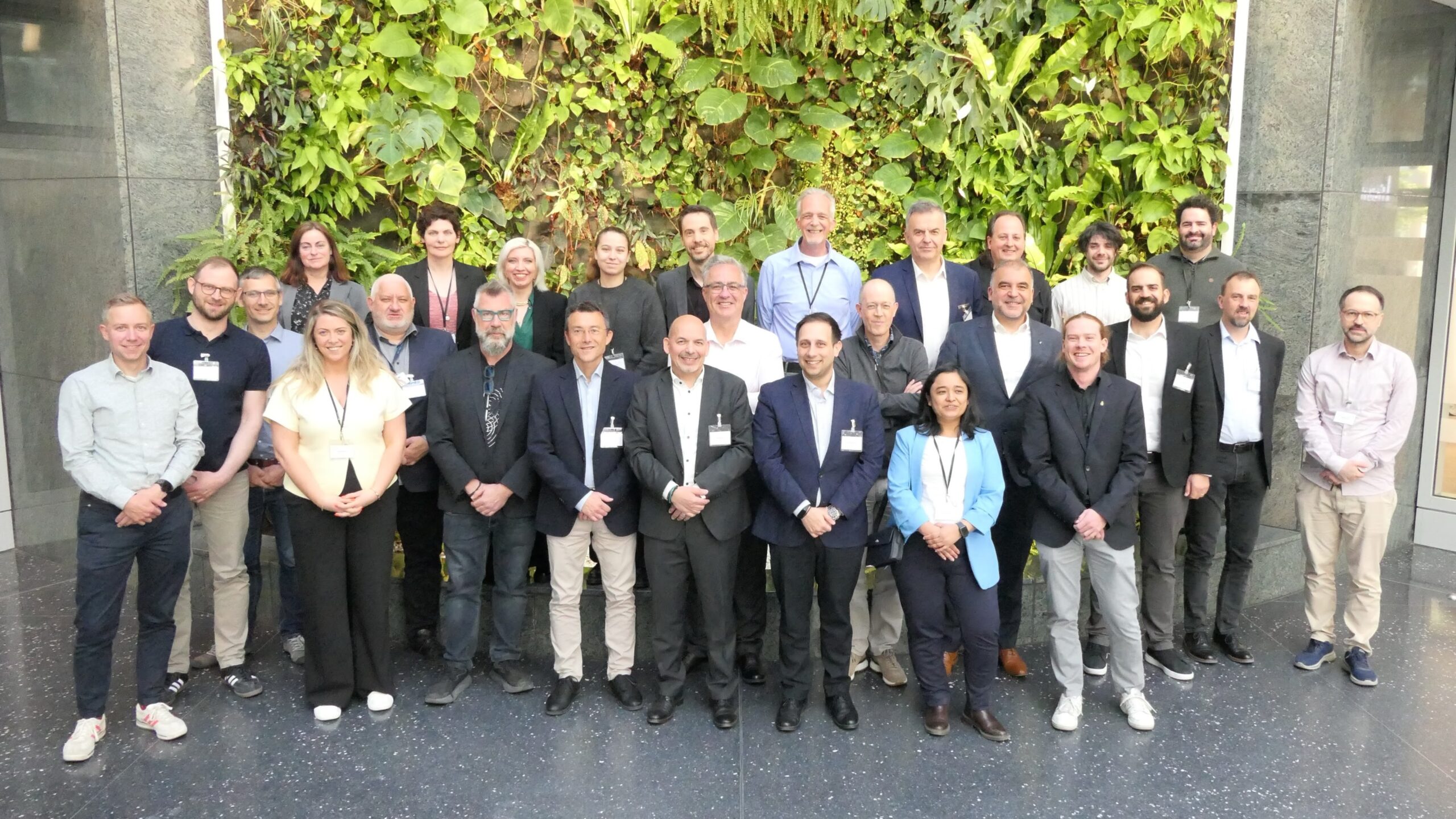
TransEuroOGS consortium partners pictured at the project kick-off meeting in Berlin.
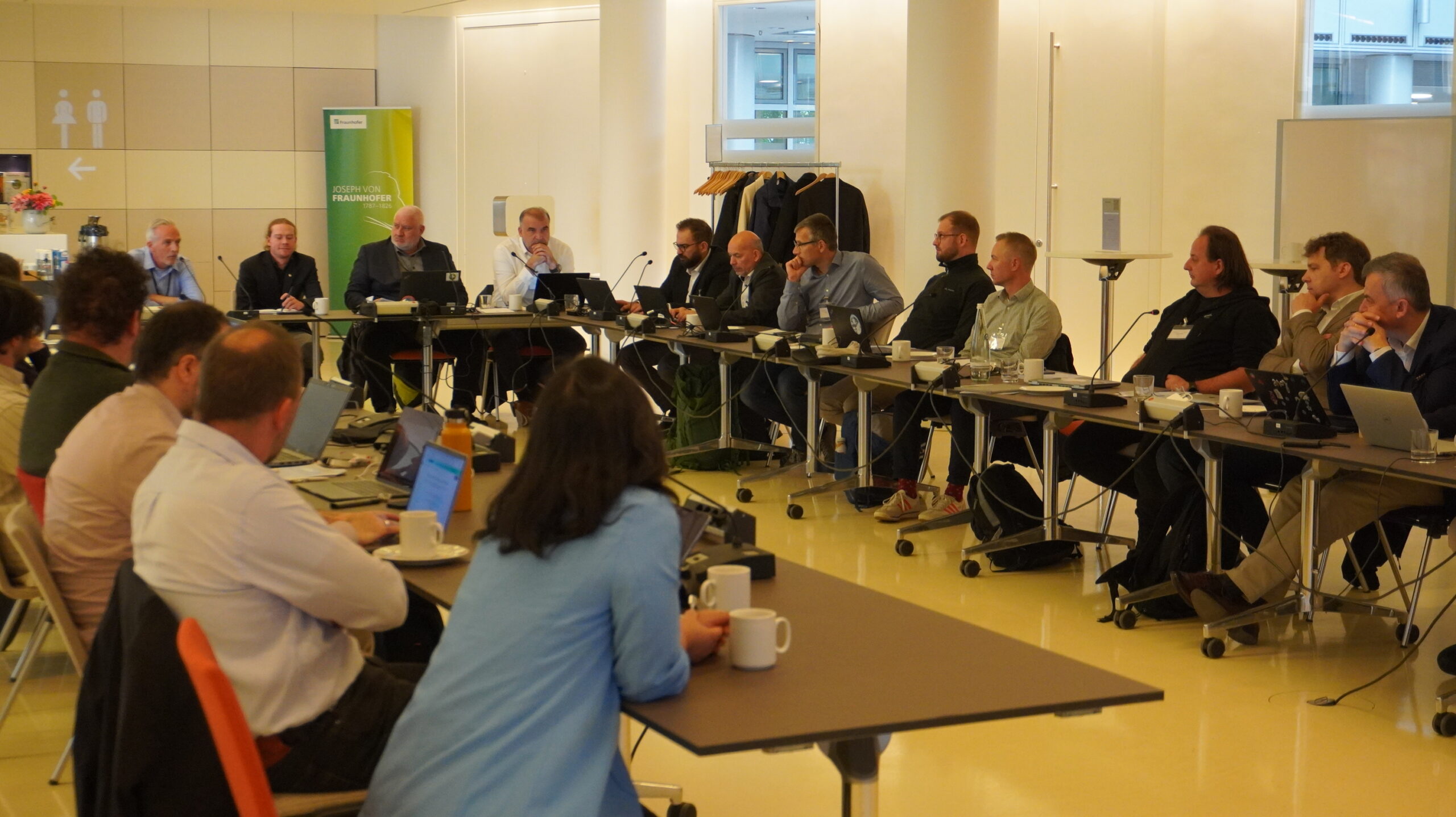
Scientists at work – consortium partners representing Germany, Greece, Ireland and Luxembourg discuss the technical work of the TransEuroOGS project.
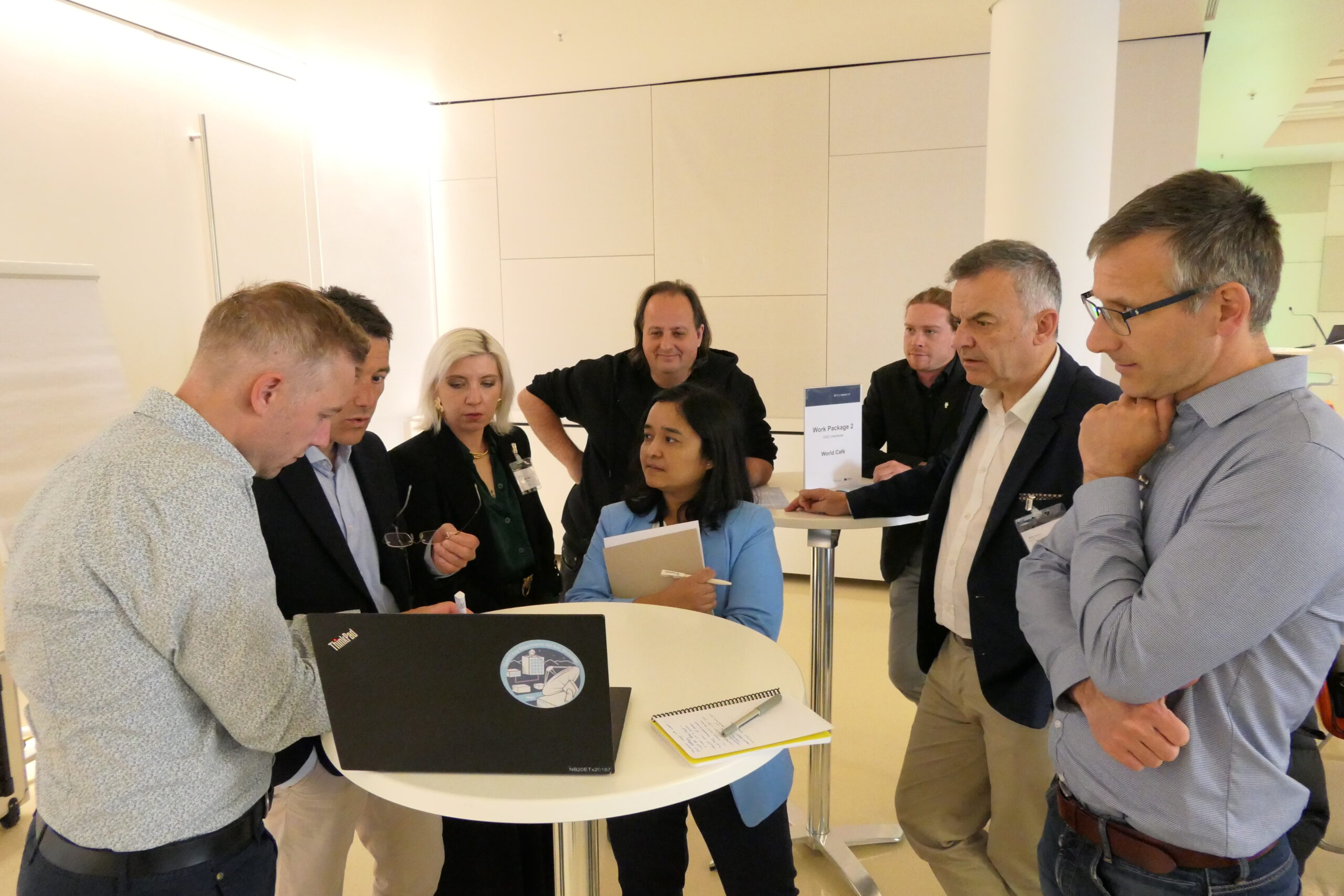
Scientists at work – consortium partners representing Germany, Greece, Ireland and Luxembourg discuss the technical work of the TransEuroOGS project
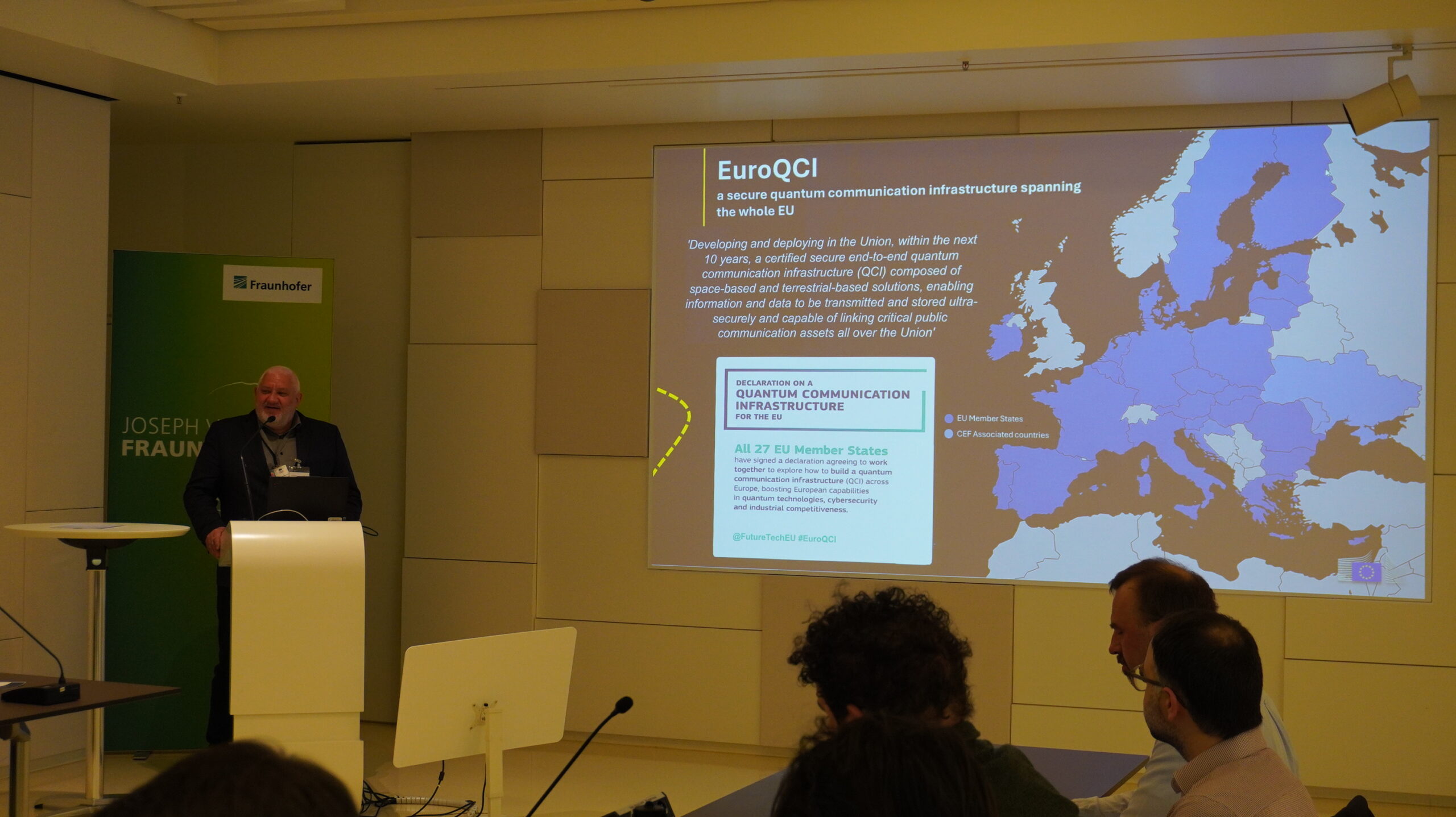
Jean-Marie Misztela, Programme Officer, Quantum Communication Infrastructure of the European Commission addresses the TransEuroOGS consortium
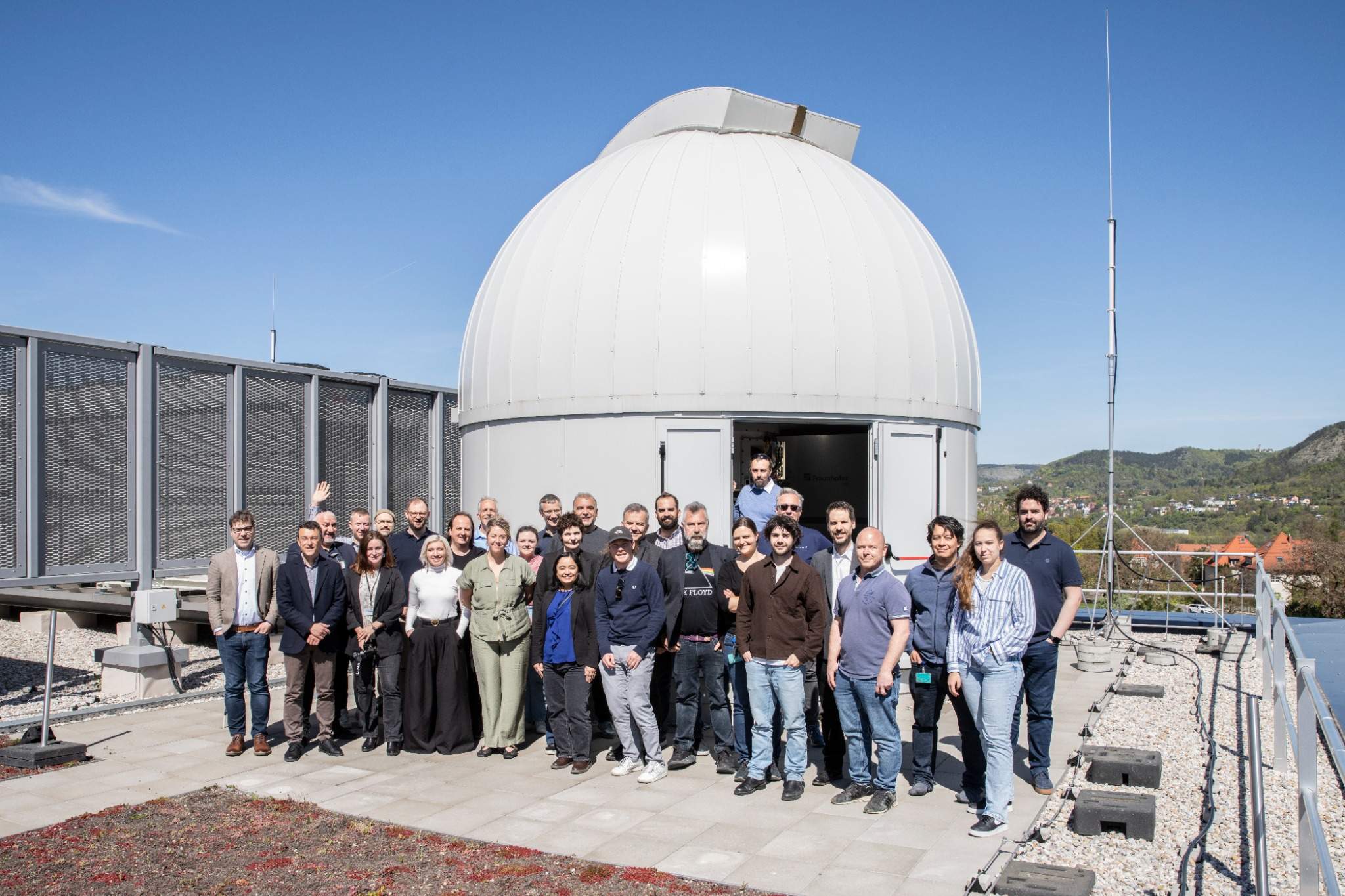
Consortium partners pictured visiting the OGS at Fraunhofer IOF at Jena.
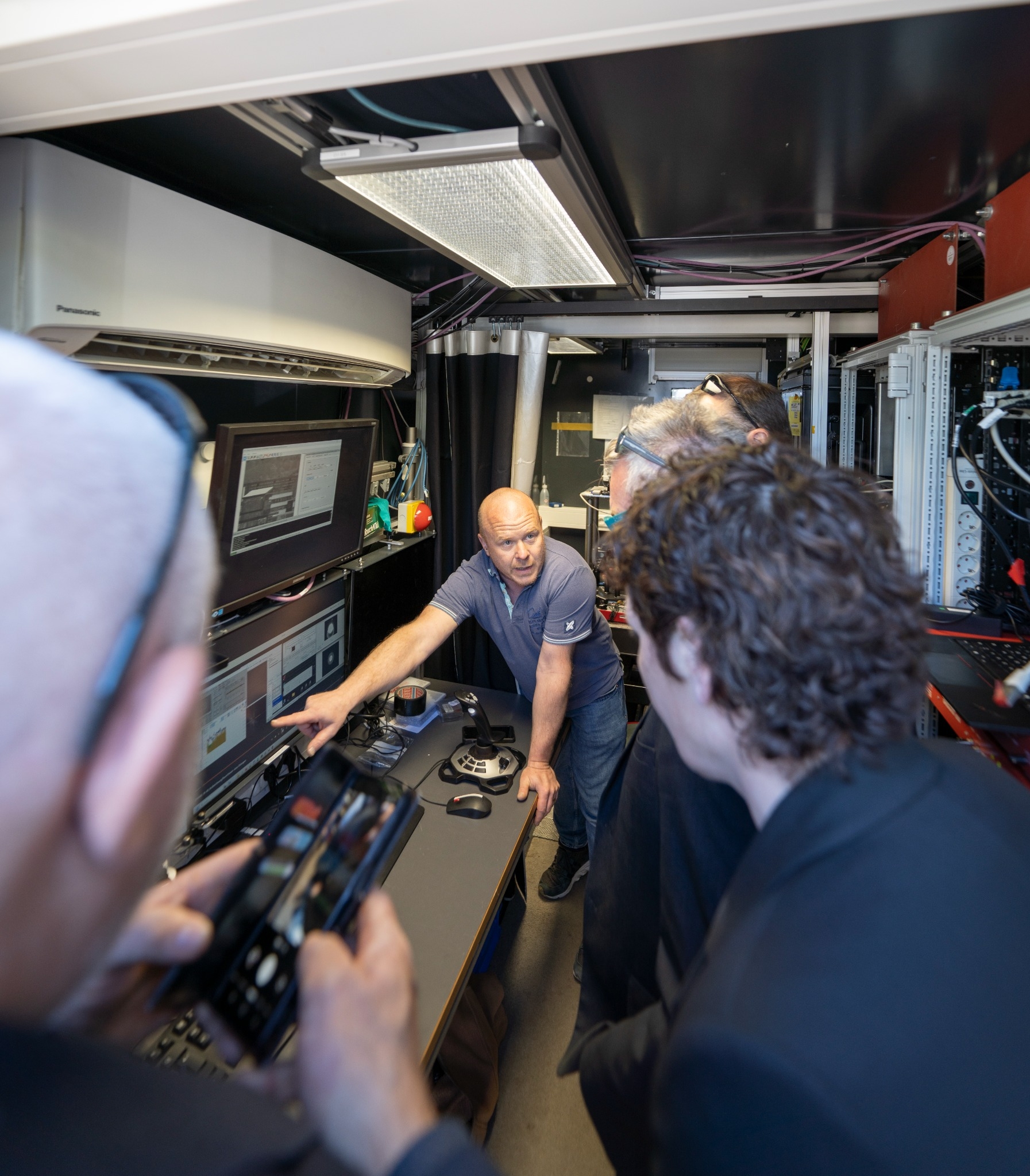
On day two of the consortium meeting, partners had the opportunity to view the ongoing work in quantum communication technology at Fraunhofer IOF in Jena.
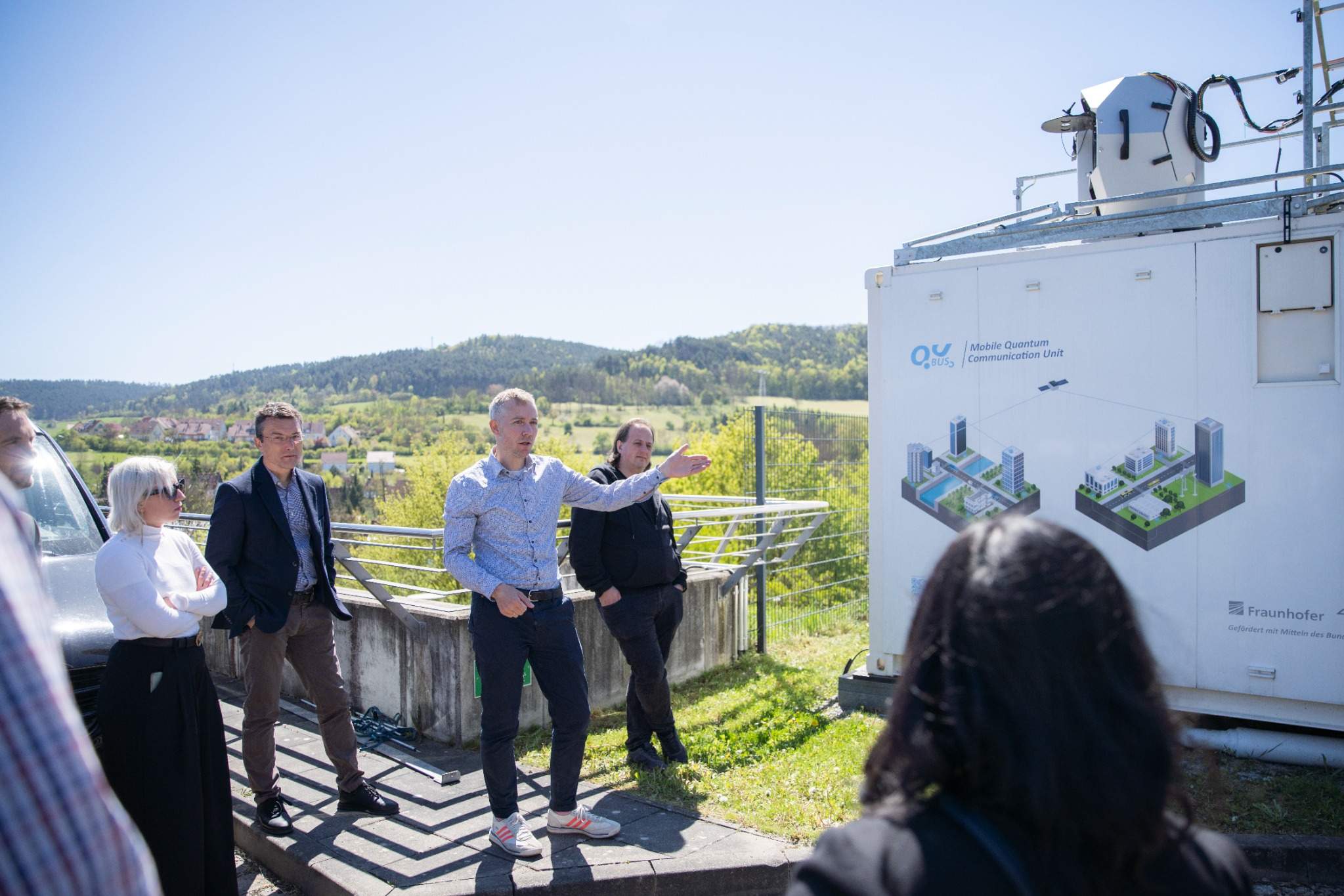
Scientists at work: The consortium enjoyed a tour of a mobile quantum unit at Fraunhofer IOF in Jena.
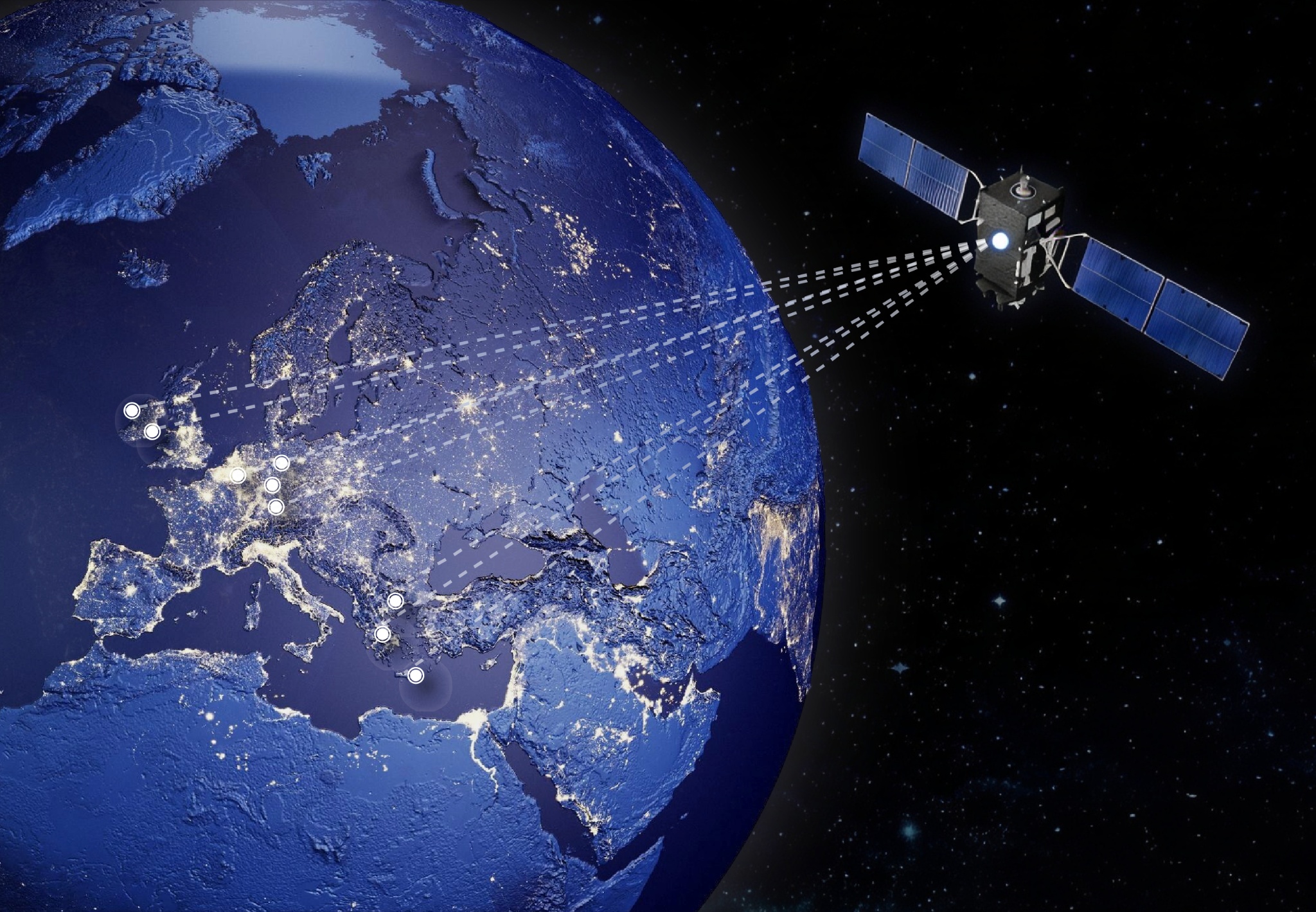
TransEuroOGS: A EuroQCI space-to-ground-network interface
Download full report in pdf

